OLED-VS-LCD

Which display technology is the best for your application?

Introduction

As display technology continues to evolve, OLED and LCD have emerged as the two leading solutions powering today’s devices. From industrial control systems to high-end consumer electronics, choosing the right display technology can directly impact product performance, user experience, and long-term reliability.

But which one is right for your application?

In this guide, we break down the core differences between OLED and LCD—from fundamental working principles to real-world performance in brightness, contrast, durability, and power efficiency. More importantly, we provide practical, application-driven recommendations to help engineers, product managers, and buyers make informed decisions with confidence.

What is OLED?

OLED (Organic Light-Emitting Diode) technology is based on organic materials that emit light on their own when an electric current passes through themwhen an electric current is applied, eliminating the need for a separate backlight. In an OLED display, each pixel is self-emissive, meaning it can independently turn on or off. 
 
This unique capability allows OLED displays to achieve true black levels by completely switching off individual pixels. As a result, OLED displays deliver virtually infinite contrast ratios and enhanced energy efficiency—particularly when rendering dark content. 
 
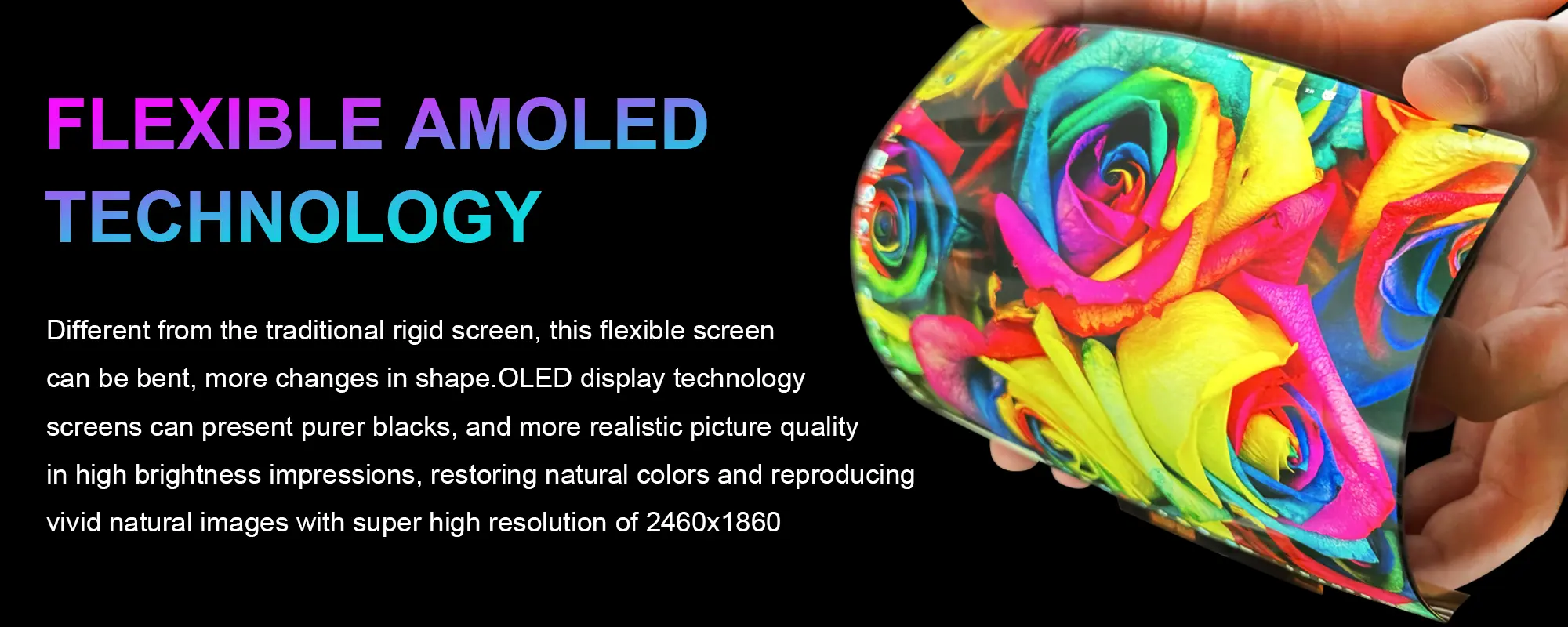
Furthermore, the removal of backlight components allows for ultra-thin form factors and mechanical flexibility, making OLED particularly suitable for next-generation applications such as flexible displays, wearable devices, and curved interfaces.

What is LCD?

LCD (liquid crystal display) is a flat-panel display or other optical device that is electronically modulated. It works by using liquid crystals—substances that flow like liquids but have a solid-like molecular structure—to control the passage of light. 
 
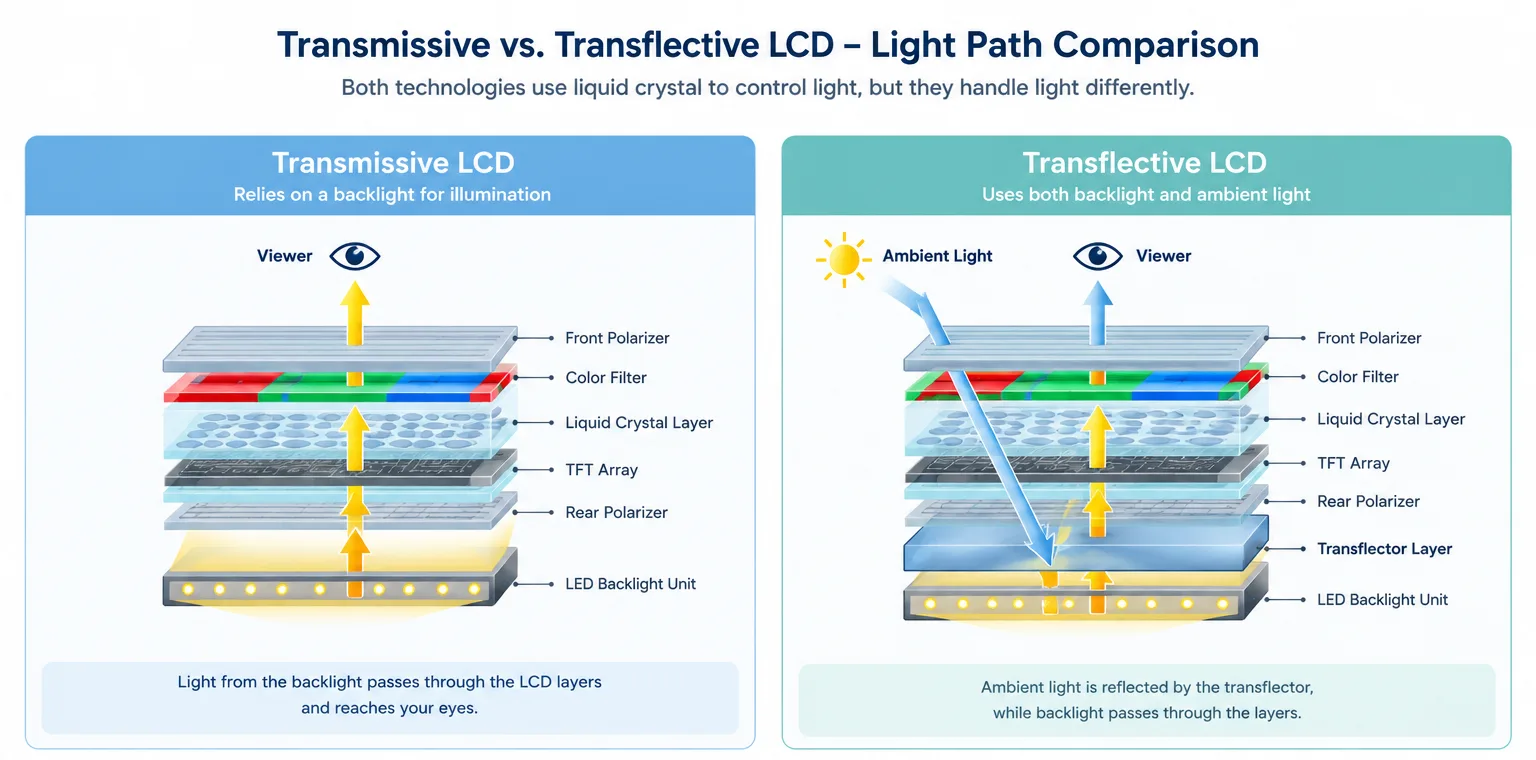
Unlike OLEDs, liquid crystals do not emit light directly; instead, they rely on a backlight or reflector to produce color or monochrome images. By responding to electrical signals to adjust the alignment of liquid crystal molecules, LCDs can block or allow light to pass through, thereby forming images on the screen. 
 
This precise control over light enables LCDs to display color and monochrome images with high brightness and stability, leading to their widespread use in industrial, medical, automotive, and consumer applications. 

OLED vs LCD: Contrast

Contrast is one of the most critical factors in display performance, directly affecting image depth, clarity, and readability. 
 
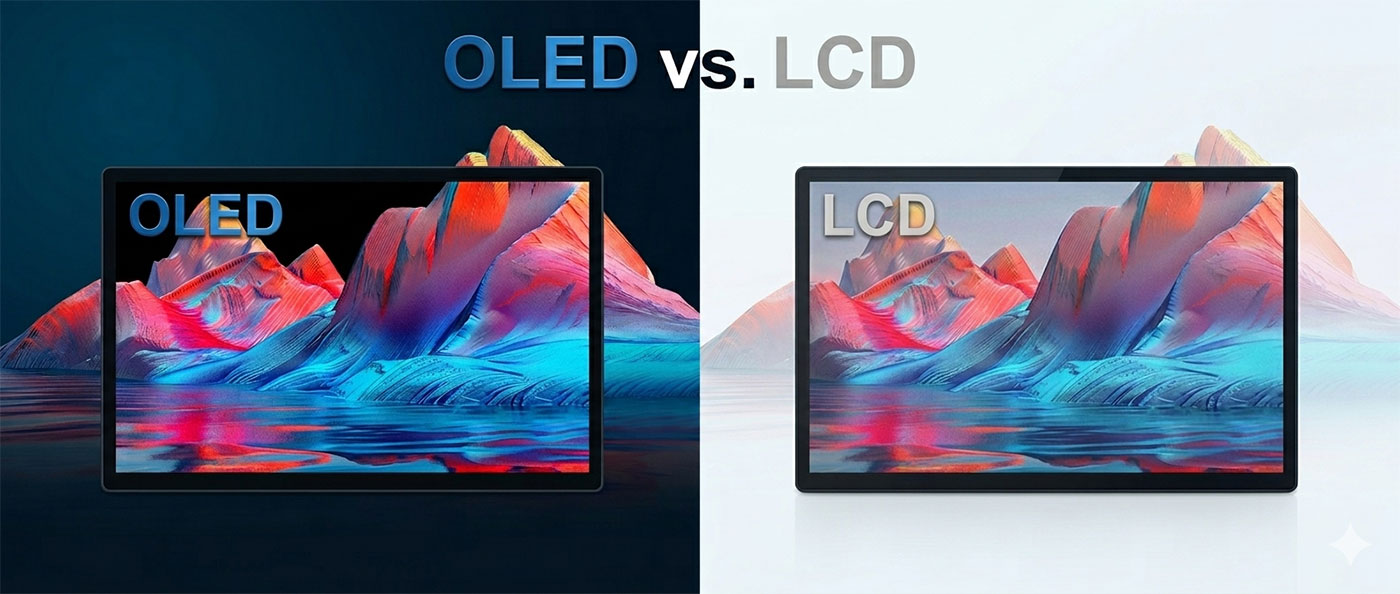
OLED displays achieve true black by completely turning off individual pixels. When a pixel is deactivated, it emits no light whatsoever, resulting in absolute black levels. This capability enables OLED panels to deliver a virtually infinite contrast ratio, which is especially noticeable in dark scenes or low-light viewing environments. 
 
The result is sharper images, enhanced depth perception, and improved text readability—making OLED ideal for applications that demand high visual fidelity, such as premium consumer electronics, automotive displays, and high-end visualization systems. 
 
In contrast, LCD technology relies on a constant backlight to illuminate the screen. Even with advanced local dimming techniques, it is difficult to completely block light leakage. As a result, black areas on LCD displays often appear slightly gray rather than truly black, reducing overall contrast performance. 
 
While modern LCDs have significantly improved through technologies such as full-array local dimming (FALD) and Mini-LED backlighting, they still cannot match the pixel-level light control of OLED. Because the backlight remains active, some degree of light bleed is inevitable, particularly in high-contrast scenes. 
 
In summary, OLED’s self-emissive architecture allows for precise, per-pixel luminance control, enabling superior contrast performance that far exceeds traditional LCD displays.

OLED vs LCD: Brightness and Color Accuracy​

One of the main differences between OLED and LCD is that LCDs use LED backlighting, whereas OLEDs do not. In terms of brightness at the pixel level, OLED displays typically have an advantage because each pixel emits light independently. This means OLEDs can achieve greater brightness at the pixel level, as they do not rely on a separate backlight.
 
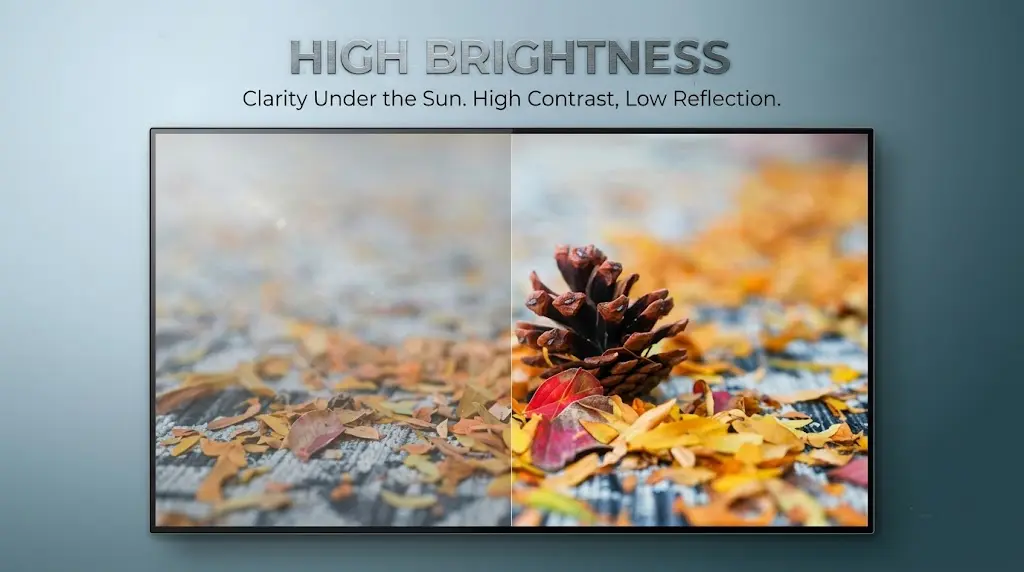
However, in terms of overall screen brightness, LCDs typically have the advantage. Their powerful backlight uniformly illuminates the entire display, enabling higher peak brightness levels. The use of a powerful backlight system allows LCDs to reach extremely high brightness levels, which is particularly beneficial in well-lit environments or for High Dynamic Range (HDR) content. Although OLED brightness has improved significantly in recent years, LCDs still perform better in high-brightness scenarios.
 
Color accuracy is another area where OLED displays excel. The ability to control each pixel individually results in more precise color reproduction and a wider color gamut. While high-end LCDs can achieve excellent color accuracy through careful calibration and advanced color management systems, OLED displays typically offer superior color performance right out of the box.
 
In summary: 
For applications requiring vibrant colors and high precision, OLED is the ideal choice.
However, for scenarios requiring high brightness and outdoor visibility, LCD is the better option. 

OLED vs LCD: Viewing Angles

Viewing angle refers to a display’s ability to maintain good image clarity, color accuracy, and contrast when viewed from different positions. OLED displays offer near-perfect viewing angles. Because OLED displays lack a backlight, they are much thinner than LCD displays, and their pixels are closer to the screen surface, giving them inherently wider viewing angles. This means that image quality remains consistent even when viewed from angles off-center.
 
In contrast, LCD displays experience changes in color and contrast when viewed from off-center angles. When tilting an LCD screen or viewing it from different angles, images may appear distorted or suffer from color distortion. This is due to the way light passes through the liquid crystal layer and the backlight structure.
 
However, many modern LCD displays now employ compensation technologies to address this issue—including In-Plane Switching (IPS) technology. LCD displays using IPS technology are significantly brighter than standard LCD displays and offer viewing angles comparable to those of OLED displays. However, modern LCD technology—particularly In-Plane Switching (IPS) technology—has significantly improved viewing angle performance. Compared to traditional LCDs, IPS panels offer more consistent color reproduction and wider viewing angles, and in some cases, they even match the performance levels of OLED displays.

OLED vs LCD: Lifespan and Durability

LCD screens have a limited operational lifespan, typically ranging from 30,000 to 60,000 hours, after which display quality begins to degrade. In contrast, OLED screens can theoretically last up to 100,000 hours under typical usage conditions (e.g., 8 hours per day).However, it is important to consider OLED’s susceptibility to image retention or burn-in. When static images are displayed for extended periods, the organic materials within the screen may leave permanent ghost images.
 
Therefore, the actual lifespan of an OLED display is highly dependent on how it is used. OLEDs used primarily for static content will have a significantly shorter lifespan compared to those used for dynamic, continuously moving images.
 
When evaluating the durability and longevity of OLED and LCD screens, it is important to recognize that both technologies have their respective strengths and weaknesses. OLED screens are known for their flexibility and thinness, which can make them more vulnerable to impact damage. That said, with proper care and appropriate usage patterns, OLEDs are less prone to burn‑in and can offer a long service life. LCD screens, on the other hand, are generally more robust and better able to withstand physical shocks. However, they may develop issues over time such as backlight failure or dead pixels.
 
In summary, while OLED may offer a longer theoretical lifespan, LCD screens tend to be more durable when it comes to physical impact resistance.

OLED vs LCD: Comparison Table

FeatureOLEDLCD
LightSelf-luminousLED backlit panels
Contrast RatioVery highLower
Color AccuracyExcellentModerate to good
Viewing AnglesWideNarrower
BrightnessLowerHigher
LongevityShorterLonger
ThicknessUltra-thinThicker due to backlighting
CostHigherLower

Summary: Choosing Between OLED and LCD

No single display technology is perfect for every situation. The choice between OLED and LCD ultimately depends on your specific priorities and usage environment.

Choose OLED if:

Your application requires exceptional image quality, infinite contrast, and a wider color gamut, making it ideal for professional creative work and high-end entertainment applications. OLED is also well-suited for scenarios where thinness, flexibility, or power efficiency in dark mode are prioritized. 
For example Wearable devices,Automotive dashboards,Consumer electronics,Smart displays.

Choose LCD if:

Your priority is long‑term reliability under static content, physical robustness, and cost‑effectiveness. LCD remains a solid choice for industrial controls, kiosks, medical equipment with fixed UI elements, or any environment where the screen may be subject to physical shocks. While contrast and black levels are inferior to OLED, modern high‑quality LCDs with local dimming can still deliver very good performance for most practical tasks.
For example, industrial control systems,Medical equipment,Point-of-sale terminals,Smart home devices,Automotive displays.
 There’s a lot to consider when deciding on a display type for your application, so we hope this guide made the choice easier for you.
Contact our engineers for a custom display solution.

FAQ

Q1: Is OLED better than LCD?

OLED offers better image quality and contrast, while LCD is more cost-effective and durable.

Q2: Why is LCD still widely used?

Because of its lower cost, high brightness, and long lifespan, especially in industrial applications.

Q3: Which display is best for industrial use?

LCD is generally the best choice due to its durability and cost-effectiveness.
Updating…
  • No products in the cart.
WhatsApp
Scan the code
Wisecocodisplay contact
You can connect with us on Facebook and LinkedIn

Facebook     |      LinkedIn

How can I help you?

email:info@wisecocodisplay.com